10 Open Source Mining Software Picks

The most popular advice about open source mining software is also the least useful: pick the miner with the highest advertised hash rate. That number doesn't tell you whether the software supports your device, rejects work, overheats a rig, or still receives maintenance. A better starting point is your actual mining environment: hardware, algorithm, operating system, pool, and how much troubleshooting you're prepared to do.
The choices below are organized around those realities. CPU miners suit experimentation and accessible setups; GPU tools vary by vendor and algorithm; ASIC and FPGA software can offer more device control but may come with legacy trade-offs. Focused miners can be easier to inspect for a specific network, though they won't help if you switch algorithms.
Cascoin adds a different approach with Labyrinth Mining, MinotaurX, and SHA-256 options. Its project describes Labyrinth Mining as a lower-power alternative with rewards claimed to be up to three times higher, but those claims need independent testing. The right comparison is measured performance on your hardware, not an attractive headline.
Table of Contents
- 1. Cascoin
- 2. BFGMiner
- 3. CGMiner
- 4. XMRig
- 5. cpuminer-opt
- 6. cpuminer-multi (tpruvot)
- 7. ccminer (tpruvot)
- 8. sgminer
- 9. kawpowminer (Ravencoin community)
- 10. VerthashMiner
- Open-Source Mining Software: Top 10 Comparison
- Build a Setup You Can Monitor and Trust
1. Cascoin
Cascoin is a lower-power option in this roundup, not a substitute for testing a miner against your own hardware. Its project centers on Labyrinth Mining, where lightweight client software simulates mice navigating a maze to collect cheese. The project describes this method as more energy-efficient than conventional mining and claims rewards can be up to three times higher. Both remain project claims, not independently verified results.
Three ways to participate
Labyrinth Mining is aimed at people who want to try a software-based approach without specialized mining hardware. MinotaurX offers a CPU-friendly option, while SHA-256 mining supports operators with ASIC hardware. These routes call for different equipment and setup choices, so check compatibility before committing time or power.
The project makes its code available under the MIT license and provides the Casplorer block explorer for checking blockchain activity. Wallet downloads, documentation, a public mining pool, and a Discord community offer starting points for users and developers. These features can help with onboarding and inspection, but they do not establish mining efficiency or future returns.

What to verify before committing
Cascoin is stewarded by a solo developer, with community participation in its development model. Before deploying it, review project activity, hardware compatibility, and maintenance status. Open code is inspectable; it isn't a substitute for checking the software and its release source.
Operator's rule: Compare energy per accepted share, not just device wattage or a headline reward claim.
For a useful test, keep the software version, time window, pool, and hardware conditions consistent. Measure power at the wall and record accepted and rejected work. Compare against a familiar CPU miner only where the algorithms allow a fair comparison. Cascoin makes no price promises or investment recommendations, and cryptocurrency value and mining returns remain uncertain. Its project site has software and setup information, but verify performance on your own equipment.
2. BFGMiner
BFGMiner is a practical choice for operators who need controls for ASIC and FPGA hardware, rather than a general-purpose miner for CPU or GPU experiments. The project's modular C codebase supports device drivers, pool management, RPC and Stratum connections, and monitoring. It's licensed under GPL-3.0.
A fit for dedicated rigs
The strongest reason to choose BFGMiner is operator control. Its device features include overclocking, temperature and fan controls, while failover and pool management help keep a dedicated setup connected when a pool becomes unavailable. Linux and Windows support, along with OpenWrt build scripts, make it relevant to operators configuring both mining systems and compact networked devices.
That flexibility asks something of the user. The command-line interface can be a hurdle for beginners, and tuning requires attention to the specific miner and its thermal limits. BFGMiner isn't the choice for modern GPU or CPU algorithms, so confirm that the project supports your exact hardware before investing time in configuration.
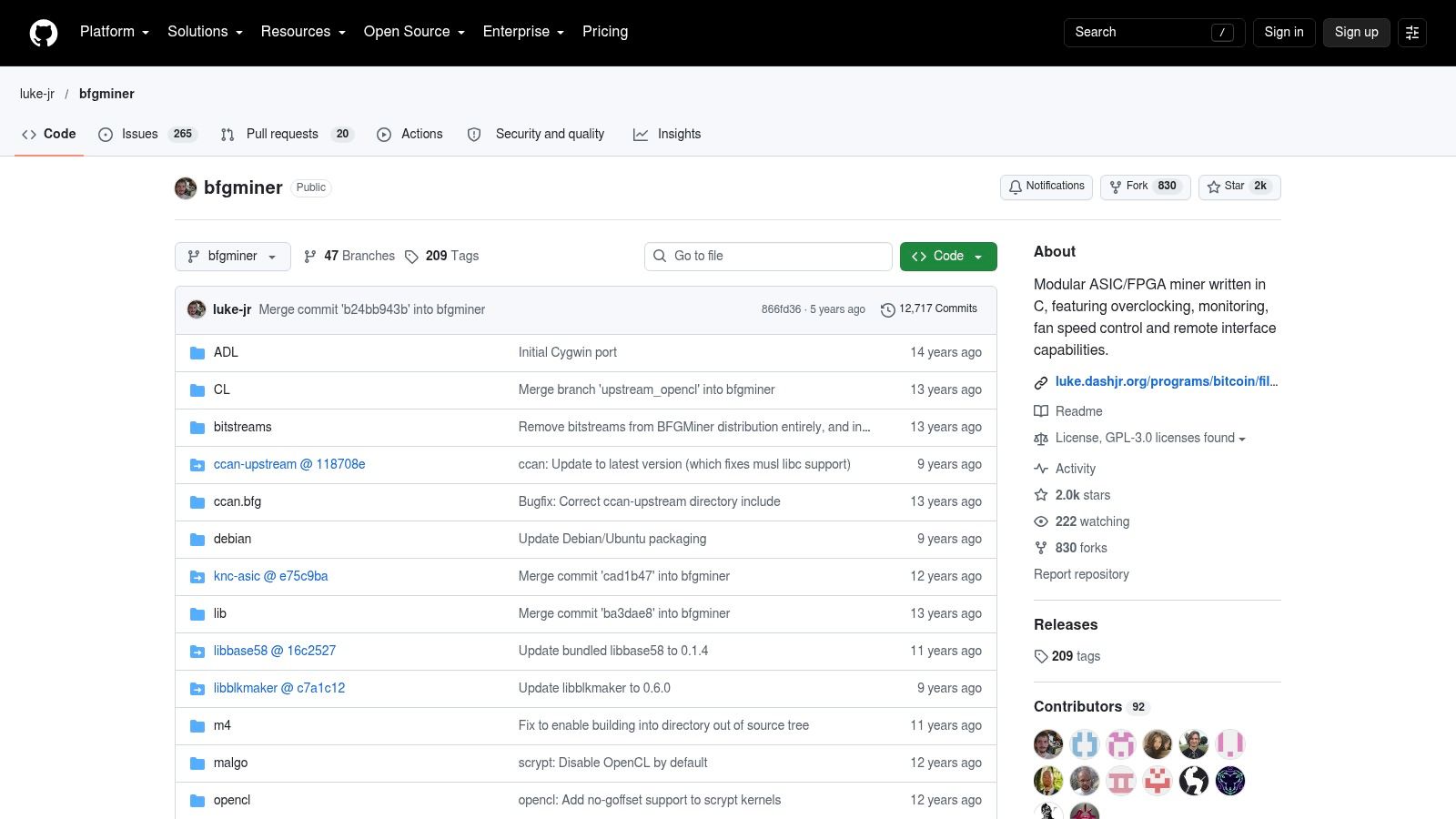
For an existing SHA-256 or FPGA rig, BFGMiner's device monitoring and pool controls can be more useful than a simpler miner with fewer operator options. It's a poor fit if you want a beginner-friendly graphical interface or broad CPU/GPU algorithm coverage. Review the project's BFGMiner repository for supported devices and current build guidance.
3. CGMiner
CGMiner remains useful as a reference point for ASIC and FPGA mining, but its maintenance status changes the practical recommendation. The upstream history records a GPU mining rewrite in 2011, CPU mining removal in 2013, and removal of GPU/OpenCL and Scrypt support later that year. The final upstream release was version 4.11.1, dated August 16, 2018, and the repository was archived in 2020. (CGMiner release history)
Useful code, limited support
CGMiner's history shows how mining software has adapted as equipment specialized. Its functionality extended beyond hashing to include multi-pool operation, Stratum and GetBlockTemplate connections, device monitoring, accepted and rejected work reporting, hardware-error tracking, and a local control API. That makes the code informative for developers and operators maintaining compatible legacy systems.
The limitation is decisive for new deployments: the official repository is archived, with no ongoing official support or new features. A fork or vendor build may still work for a particular rig, but you'll need to assess its maintenance and compatibility separately. The project is not a sensible default for current CPU or GPU proof-of-work mining.
Use CGMiner when you're maintaining an existing setup or studying a historically influential implementation, not because its age implies active support. For a more approachable starting point, compare your needs with this guide to mining software for beginners. Check the CGMiner repository for its archived source and API context before adopting a fork.
4. XMRig
For CPU mining, XMRig is the broad, actively maintained option in this list. It's best known for Monero's RandomX algorithm and also supports GPU backends and other algorithms, including KawPow, CryptoNight variants, and GhostRider. The project's cross-platform builds and configuration tools make it useful both for a first test and for more deliberate tuning.
Broad platform support, visible fee
XMRig supports CPU backends for x86, ARM, and RISC-V. For GPUs, it offers OpenCL support for AMD and a CUDA plugin for NVIDIA. JSON configuration, runtime reconfiguration, an HTTP API, and a setup wizard provide more control than a bare command-line launcher, while official binaries are available for Windows, Linux, macOS, and BSD.
One cost to understand before deployment is the default 1% developer donation, which can be changed through configuration or disabled in the source. That's a trade-off to weigh against the project's support and tooling. Open-source availability doesn't guarantee the highest GPU performance on every algorithm, so test against other suitable options rather than assuming one miner wins across all hardware.
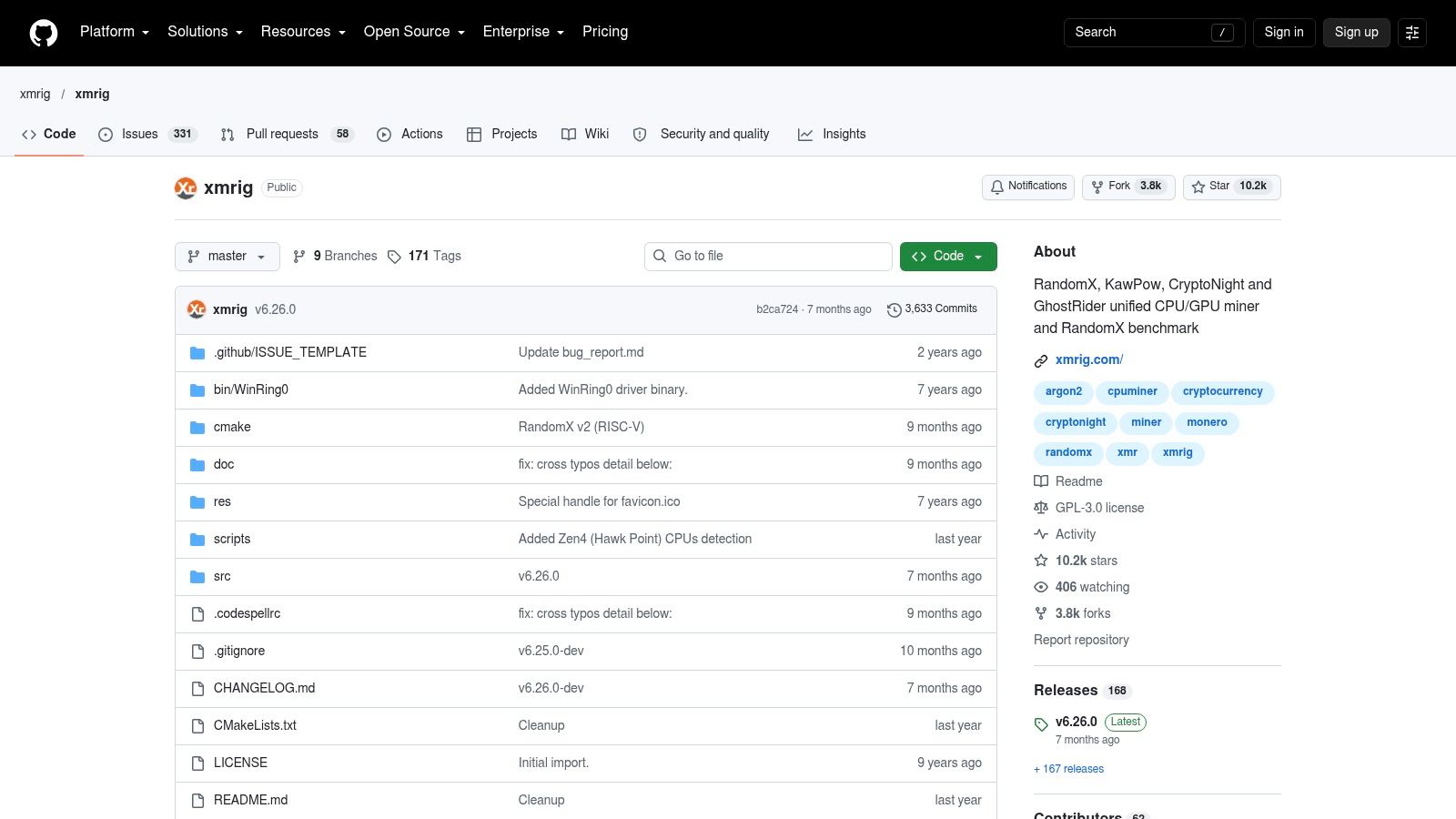
XMRig is a strong starting point when you want an actively maintained miner and are willing to tune its configuration. Review the XMRig project, then compare its setup with these mining program options before settling on a workflow.
5. cpuminer-opt
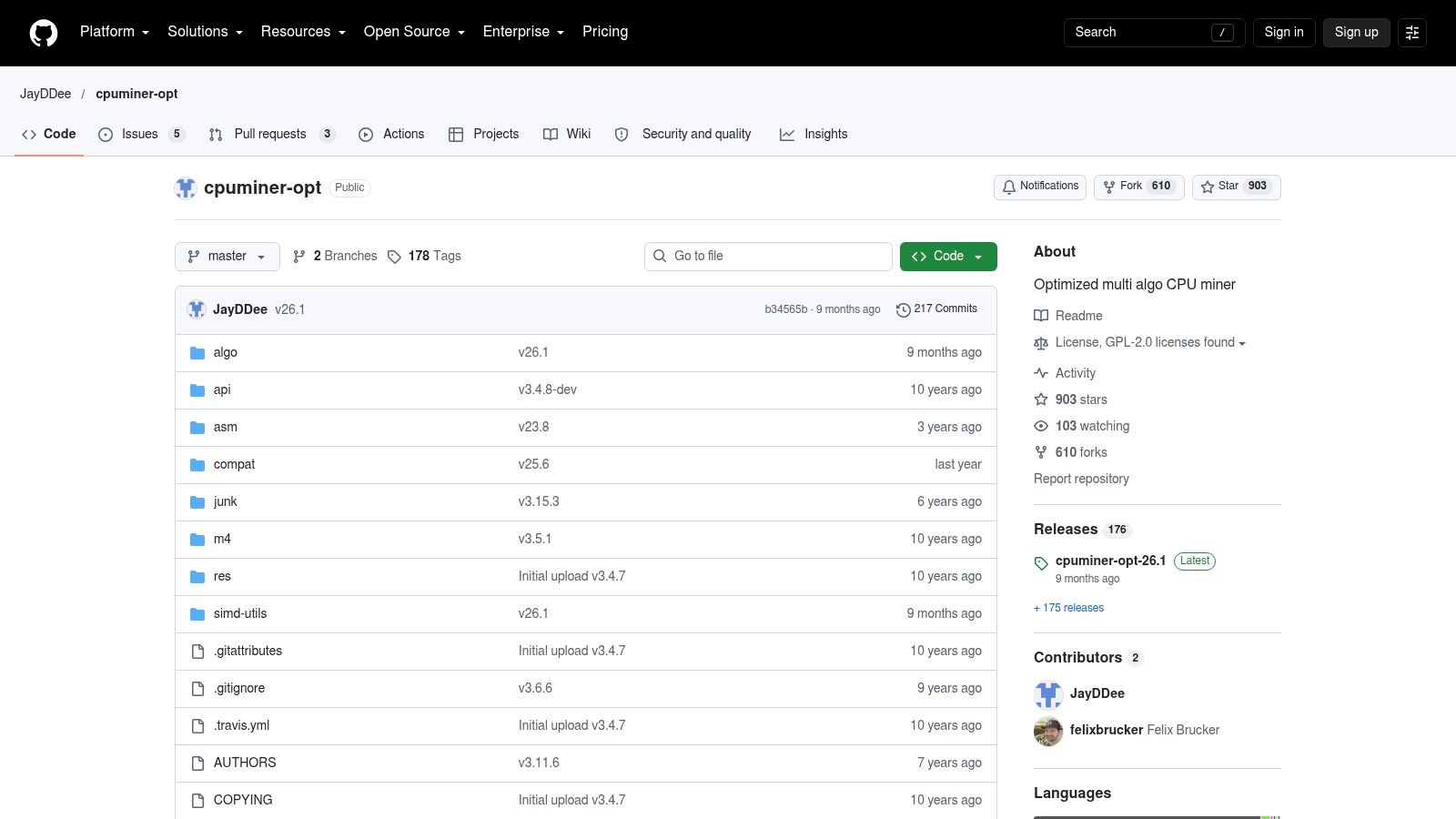
cpuminer-opt is for operators who want to experiment with multiple CPU-friendly algorithms without switching miners for every test. Its supported options include yespower and yescrypt variants, and its optimizations use CPU instruction sets such as AVX and AVX2 where available. The project is licensed under GPL-2.0 and has no built-in developer fee.
Worth tuning, not necessarily plug and play
This miner's breadth is its practical advantage. Windows and Linux builds, sample configurations, and algorithm-specific notes help users get started, while SIMD optimizations give experienced operators room to tune for their CPU. That makes it a useful choice for exploring smaller proof-of-work coins or comparing algorithm behavior on the same machine.
Compatibility still needs checking. Some older algorithms are no longer supported, and AMD CPUs older than Piledriver aren't supported. The best results may also depend on selecting appropriate per-algorithm flags, so an out-of-the-box run won't necessarily tell you what the hardware can do.
Don't compare miners by a single run. Keep pool and hardware conditions consistent, and check accepted work as well as resource use.
cpuminer-opt makes sense when its algorithm list matches your target and you're comfortable checking CPU support and configuration details. For a general reference, the cpuminer-opt repository is the place to verify available algorithms, builds, and project guidance.
6. cpuminer-multi (tpruvot)
cpuminer-multi is a compatibility-minded CPU miner built from pooler's cpuminer. It covers algorithms including scrypt, sha256d, Lyra2 variants, NeoScrypt, and X11/X16 variants, making it useful when you're checking older coin forks or testing a CPU setup that another miner handles poorly. It's free and licensed under GPL-2.0.
Use it as a fallback, not a performance promise
The command-line interface is straightforward, and the repository includes example configurations and manpages. Its breadth can help operators establish a baseline across different forks. It may also serve as a fallback when cpuminer-opt doesn't suit a particular setup, though that's a compatibility choice rather than a guarantee of better performance.
The trade-off is maintenance and optimization. cpuminer-multi is less actively maintained and less aggressively optimized than cpuminer-opt, and some supported algorithms belong to niche or inactive networks. Before deploying it, confirm that the target coin is active and that the miner's implementation matches the network's current requirements.
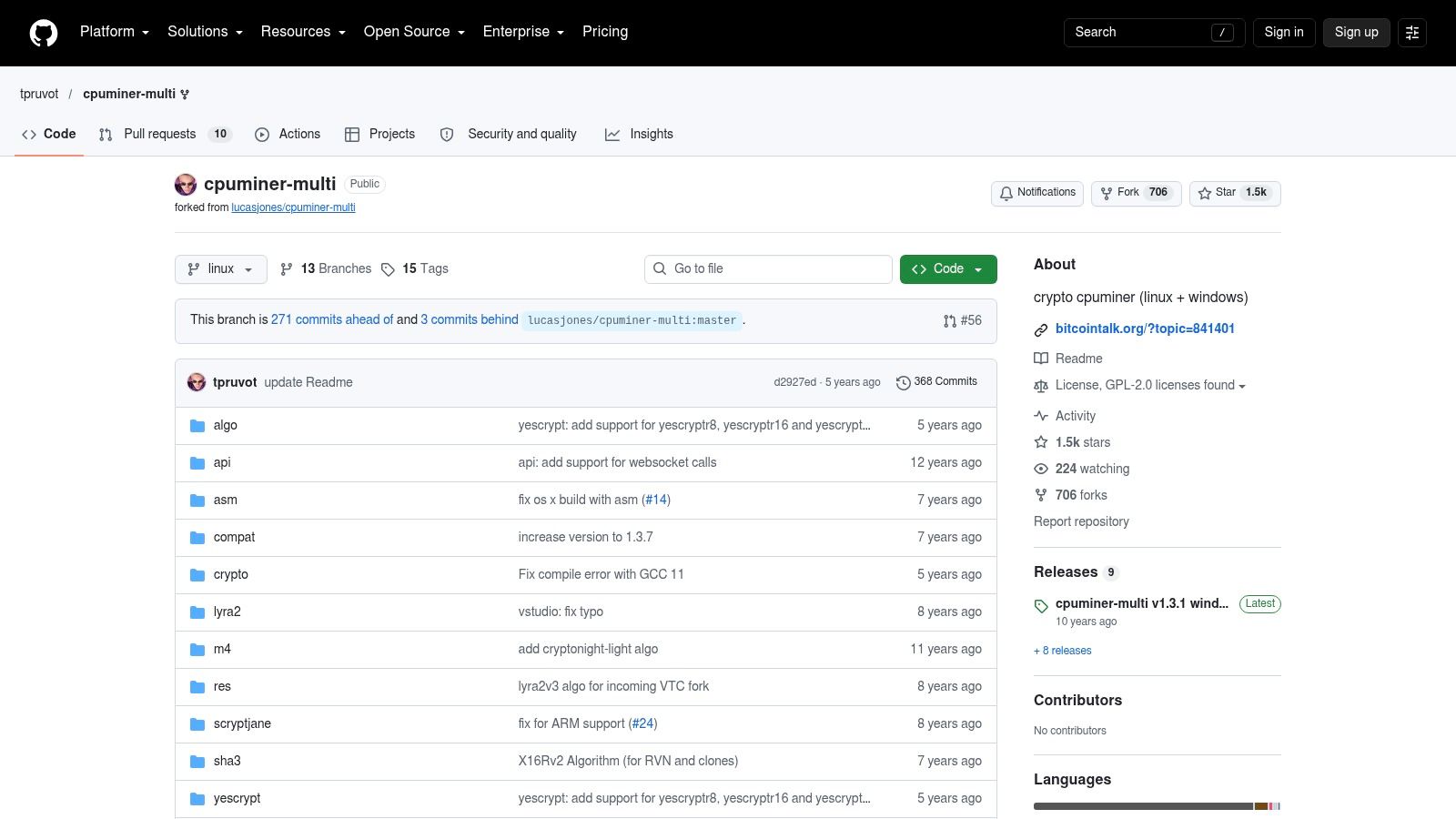
For a deeper look at the limitations of trying to mine Bitcoin with a CPU, see this guide to Bitcoin CPU mining. Check the cpuminer-multi repository for its supported algorithms and build instructions, and treat its broad coverage as a starting point for testing rather than proof that every listed network remains practical.
7. ccminer (tpruvot)
ccminer is a CUDA miner for NVIDIA GPUs aimed at users working with altcoin algorithms outside mainstream GPU mining stacks. Its open CUDA kernels can be inspected and modified, which makes the project useful for developers learning how a miner implements an algorithm as well as operators who need a specific legacy or niche option. It's licensed under GPL-3.0.
NVIDIA-only by design
The project lists algorithms such as X11/X16 variants, Lyra2, Quark, Qubit, and Skein. Windows and Linux builds, API support, benchmarking tools, and sample configurations provide a base for testing and adapting a setup. For a developer, kernel visibility is a meaningful advantage over a closed binary that can't be examined.
The constraint is hardware support: ccminer targets NVIDIA CUDA, not AMD GPUs. Its development pace is slower, and some supported algorithms are dated, so confirm that your target network and GPU are still supported by the particular build you plan to use. A tool that can benchmark a kernel doesn't establish profitability on a live pool.
Use ccminer when CUDA support and code inspection are priorities, especially for experimentation with its supported algorithms. It's less compelling when you need current maintenance, broad vendor compatibility, or a general-purpose miner. The ccminer repository is the relevant reference for source, builds, and the project's algorithm coverage.
8. sgminer
sgminer is an OpenCL GPU miner historically used for scrypt-based coins, particularly on AMD hardware. Its appeal is less about being a universal modern miner and more about providing an open, modifiable starting point for classic scrypt networks, forks, and older GPU rigs. It's licensed under GPL-3.0.
Control comes with setup work
The software supports multi-threaded mining, multiple pools, OpenCL kernels, and AMD GPU monitoring with fan and clock controls. Those features can help operators inspect device behavior and experiment with kernel settings. Cross-platform builds and configuration documentation are available, but project documentation has been described as outdated or incomplete.
That matters in practice. Expect to research your device and configuration rather than rely on a smooth setup path. Tuning is necessary, and profitability depends on the coin, pool, hardware, and operating conditions, so a working miner isn't evidence of a useful return.
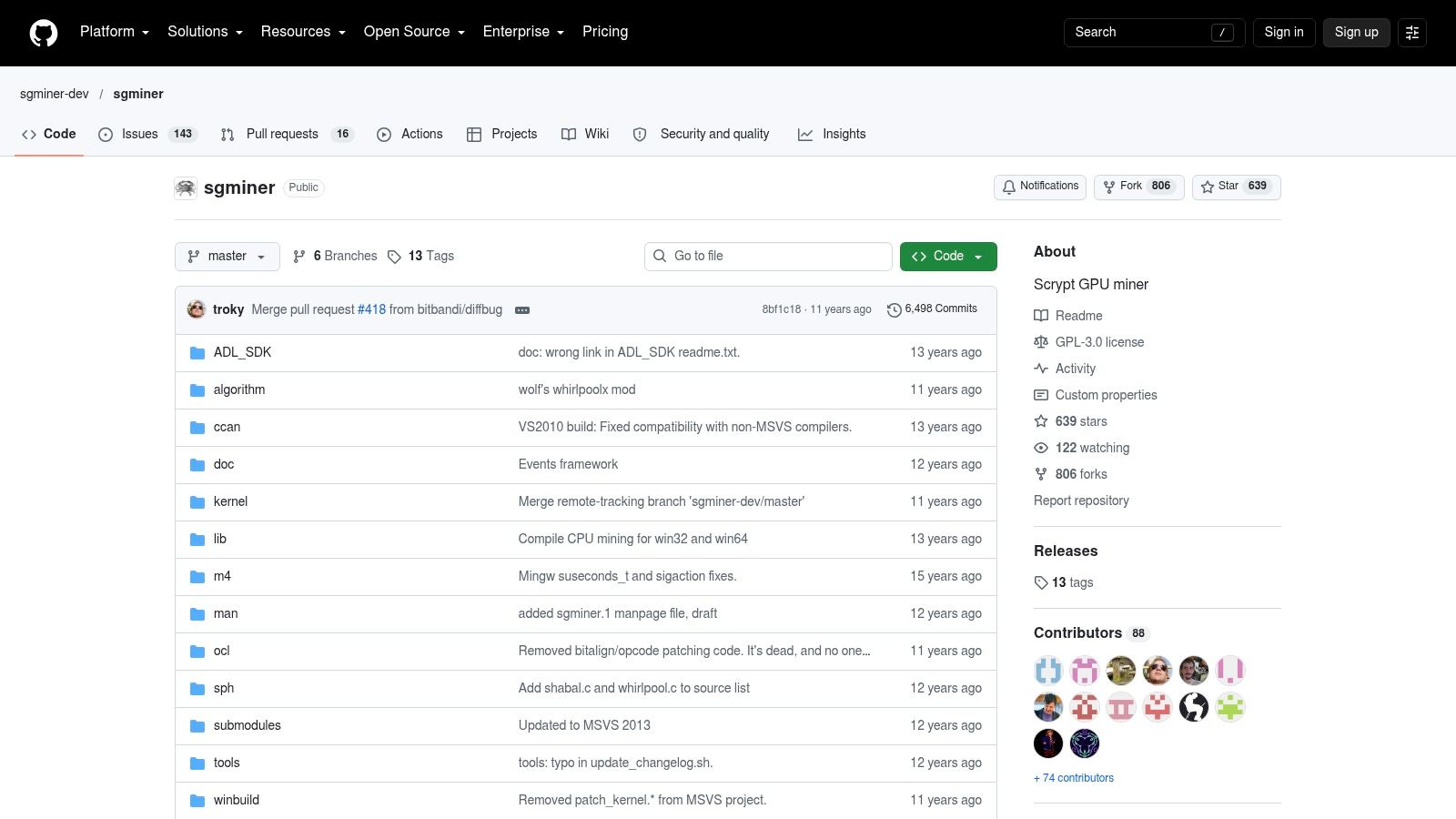
sgminer fits operators who value kernel inspection and device controls on a supported setup. It's a weaker choice when you need complete documentation, broad algorithm coverage, or a low-maintenance experience. Check the sgminer project before building, then verify that its instructions and software work with your operating system and GPU.
9. kawpowminer (Ravencoin community)
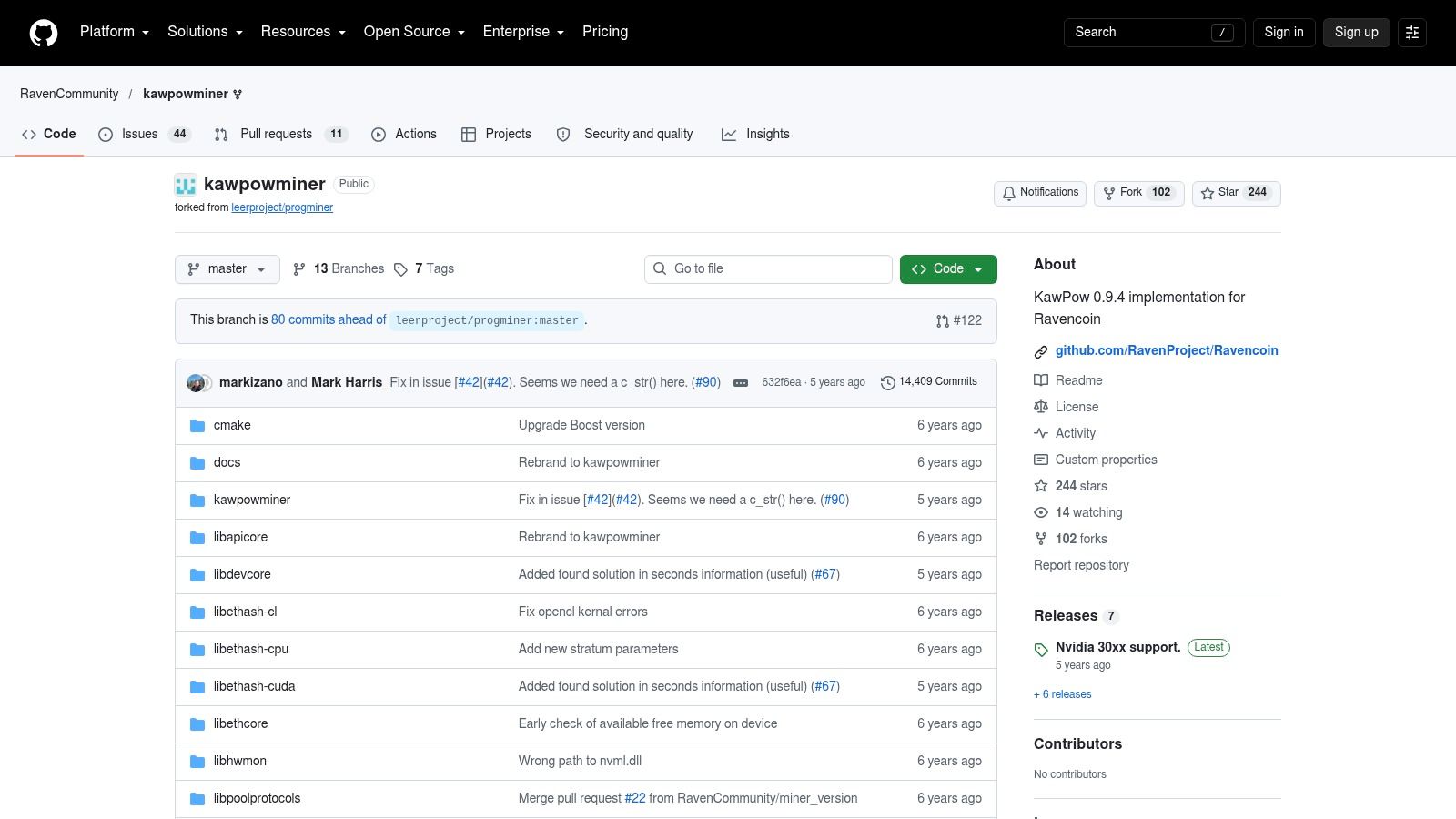
kawpowminer is a focused option for Ravencoin's KAWPOW algorithm. The community project supports Stratum and Windows and Linux builds, with NVIDIA and AMD backends noted in its project information. Its open-source implementation is described as zero-fee, which may appeal to operators who want to inspect the code rather than rely on a closed-source miner.
The cost of a community-maintained tool
The narrow focus is also an advantage: kawpowminer is easier to evaluate when you specifically want to mine KAWPOW than a general miner whose algorithm support may be irrelevant. Community issues and forks can also help users work with updated build toolchains. But the development cadence can be sporadic, and community reports note hardware and support quirks for some GPUs.
Closed-source alternatives may perform better on some setups. That doesn't make them the right choice for everyone, but it means operators should compare accepted work, stability, and power use on their own hardware instead of assuming that open source or a stated zero fee implies better results.
For GPU operators: Treat community builds as software you need to verify, not just binaries you can launch.
If the project's trade-offs fit your deployment, review the Ravencoin community kawpowminer repository for code, build notes, and open issues. Confirm the GPU backend and toolchain compatibility before putting a rig into regular operation.
10. VerthashMiner
VerthashMiner is a single-algorithm GPU miner for Vertcoin's Verthash. It supports AMD OpenCL and NVIDIA CUDA backends, along with solo and pool mining through Stratum. For operators committed to Vertcoin and interested in open code, its narrow purpose can be easier to reason about than a tool carrying support for many unrelated algorithms.
A focused Vertcoin setup
The miner includes tools to generate and verify the verthash.dat file, an operational requirement users need to account for before mining. It also provides on-GPU mining, build instructions, and GitHub releases. Support for both AMD and NVIDIA makes it less restrictive than a CUDA-only option when the project's GPU backends match your hardware.
The central limitation is exactly that focus: VerthashMiner is not a general-purpose miner. You'll need to manage the data file and confirm that your chosen release, GPU, and pool setup work together. If you regularly switch algorithms or coins, broader software may reduce the number of tools you maintain, though it may offer different trade-offs in performance and inspectability.
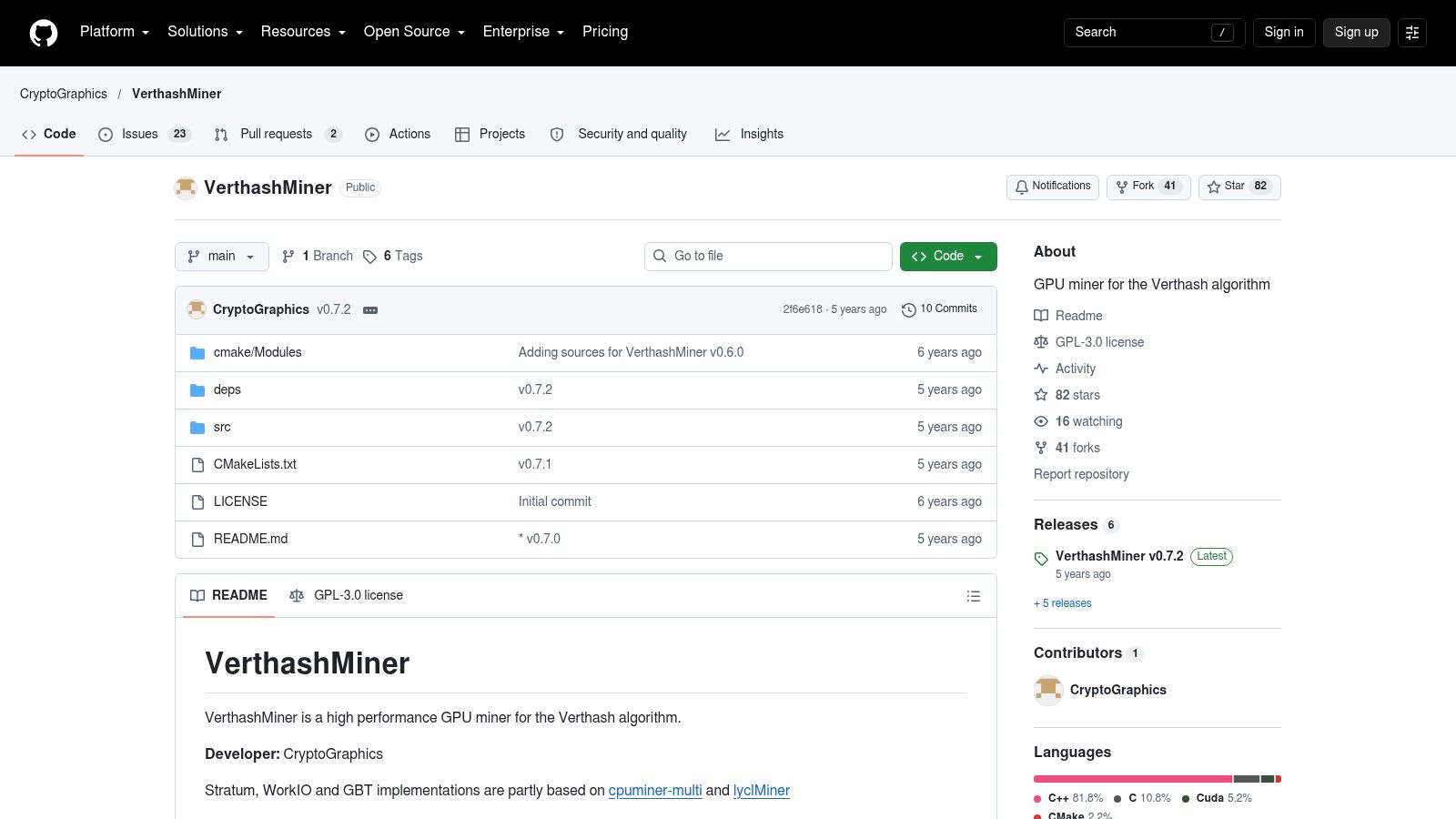
Choose VerthashMiner when Vertcoin is the target and a dedicated open implementation suits your workflow. The VerthashMiner repository provides the relevant source, releases, and build guidance. Check its instructions for generating and verifying verthash.dat before troubleshooting pool or GPU behavior.
Open-Source Mining Software: Top 10 Comparison
| Miner | Mining Focus & Hardware | Core Strengths | Usability / Status | Best For | Cost / Value |
|---|---|---|---|---|---|
| 🏆 Cascoin | Labyrinth Mining, CPU-friendly MinotaurX, or SHA-256 ASICs | ✨ Playful maze-mining concept; project claims up to 3× rewards and lower power use (not independently verified); open MIT code | ★ Wallets, documentation, pool, and explorer; solo-developer-led | 👥 Miners and contributors seeking a community-driven network | 💰 Pricing and returns not stated; crypto value is volatile |
| BFGMiner | SHA-256 / scrypt; ASICs and FPGAs | ★ Detailed device controls, monitoring, and pool failover | Command-line; mature project | 👥 Experienced ASIC/FPGA operators | 💰 Free, GPL-3.0 |
| CGMiner | SHA-256; ASICs and FPGAs | ★ Established API and legacy compatibility | Official repository archived; no official support | 👥 Legacy users and developers | 💰 Free, GPL-3.0 |
| XMRig | RandomX and other algorithms; CPU and GPU | ★ Active releases, tuning tools, broad platform support | Setup wizard; configurable 1% default developer donation | 👥 CPU miners and multi-platform users | 💰 Free, GPL-3.0; donation configurable |
| cpuminer-opt | Many CPU algorithms, including yespower and yescrypt | ✨ SIMD optimizations; no built-in developer fee | Active updates; algorithm flags may require tuning | 👥 CPU miners exploring smaller coins | 💰 Free, GPL-2.0 |
| cpuminer-multi (tpruvot) | Multiple CPU algorithms | ★ Broad algorithm coverage; useful fallback | Less optimized and maintained than cpuminer-opt | 👥 Users with older CPUs or compatibility needs | 💰 Free, GPL-2.0 |
| ccminer (tpruvot) | Multiple algorithms; NVIDIA GPUs | ✨ Inspectable CUDA kernels and benchmarking | Slower development; NVIDIA-only | 👥 NVIDIA users and CUDA learners | 💰 Free, GPL-3.0 |
| sgminer | Scrypt; primarily AMD GPUs | ★ Multi-pool support and device controls | Older documentation; tuning often needed | 👥 Classic scrypt miners and older GPU rigs | 💰 Free, GPL-3.0 |
| kawpowminer | KAWPOW; NVIDIA and AMD GPUs | ✨ Open, zero-fee community implementation | Community-maintained; update cadence may vary | 👥 Ravencoin miners who value auditable code | 💰 Free, open source |
| VerthashMiner | Verthash; AMD and NVIDIA GPUs | ★ Solo/pool modes; verthash.dat tools | Focused on one algorithm; requires data-file management | 👥 Vertcoin GPU miners | 💰 Free, open source |
Build a Setup You Can Monitor and Trust
Choose software that matches your hardware and algorithm, not the project with the most attractive headline. XMRig and cpuminer-opt serve different CPU workflows; BFGMiner is oriented toward ASIC and FPGA control; and focused GPU options such as ccminer, kawpowminer, and VerthashMiner only make sense when their algorithm and hardware support match your target. CGMiner's archived upstream status makes it a maintenance decision, not a default recommendation for a new rig.
Before you commit equipment, verify the repository, license, release history, supported devices, pool configuration, and security assumptions. Public source improves the opportunity for inspection, but it doesn't automatically prove that a downloaded binary came from that source or that a build is safe. Check release provenance and configuration, and make sure you understand any developer fee, required permissions, and pool endpoints.
Measure the actual setup rather than repeating its marketing. Keep the hardware, software version, pool, and test conditions consistent, then record wall power, accepted and rejected work, stability, and thermal behavior. For efficiency claims, energy per accepted share is more informative than wattage alone. Reward claims and profitability should remain unverified until you test them on your own configuration.
For lower-power experimentation, compare Cascoin's Labyrinth Mining and MinotaurX options with established CPU tools where the hardware and task allow a meaningful comparison. Its SHA-256 route may interest experienced ASIC operators, but novelty doesn't replace checks for device support, maintainability, and measured results. The project describes Labyrinth Mining as lower-power and claims rewards can be up to three times higher; independent, reproducible measurements are needed to establish how those claims apply to a particular deployment.
Keep an eye on the maintenance burden after setup, too. A miner that works today may depend on an old driver, a community fork, or a configuration that becomes fragile when the pool changes. For a long-running rig, favor software you can inspect, update, monitor, and replace without guessing what it's doing. For experimentation, an older or narrower project may still be useful, as long as you accept the support and compatibility limits.
Cascoin offers Labyrinth Mining, CPU-friendly MinotaurX, and SHA-256 mining in an open-source project with public code and blockchain activity. If you're comparing open source mining software and want to evaluate a different mining approach directly, explore Cascoin and review its available wallets, documentation, and mining options before testing it on your setup.